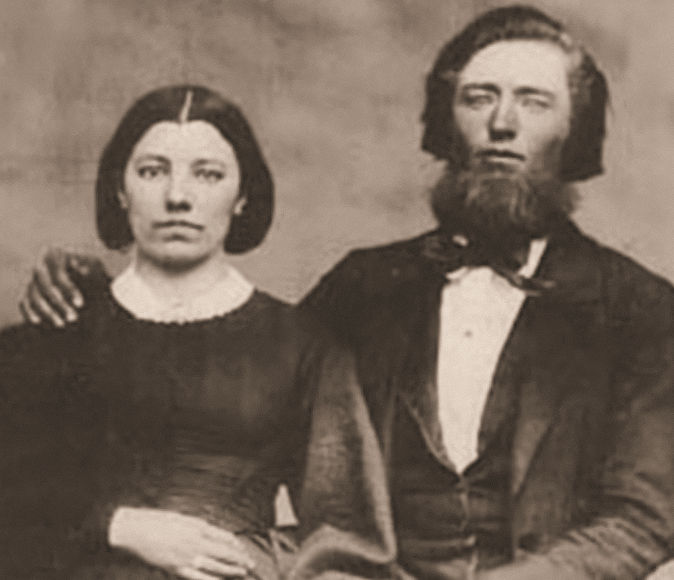
Charles Phillip Ingalls (January 10, 1836 – June 8, 1902) was an American pioneer, farmer, government official, musician, and carpenter. He is best known as the father of Laura Ingalls Wilder, the author of the famous “Little House” series of books, in which he is depicted as the character “Pa.” This character was also featured in the television adaptation of the series.
Early Life and Family
Charles Ingalls was born in Cuba, New York, the third of nine children born to Lansford Whiting and Laura Louise (née Colby) Ingalls. His parents are portrayed as “Grandpa” and “Grandma” in Wilder’s book, “Little House in the Big Woods.” Charles’ father, Lansford, was born in Dunham, Missisquoi County, Lower Canada (now Dunham, Quebec, Canada) and was a descendant of Henry Ingalls, who was born in Skirbeck, Lincolnshire, England, and later settled in the Massachusetts Bay Colony. Charles’ mother, Laura Louise, was born in Vermont and was a descendant of Edmund Rice, an early immigrant to the Massachusetts Bay Colony. His paternal grandmother, Margaret Delano, was a Mayflower passenger Richard Warren descendant and was connected to the Delano family of New York, the ancestors of U.S. President Franklin Delano Roosevelt. In the 1840s, when Charles was a young boy, his family moved from New York to the tallgrass prairie of Campton Township, just west of Elgin, Illinois.
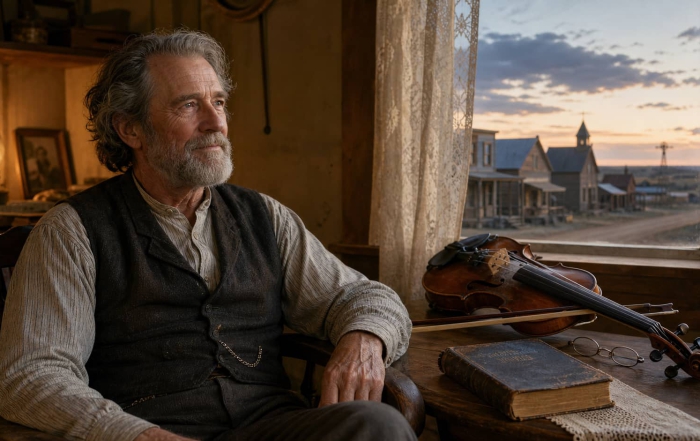
Charles Ingalls became skilled as a hunter-trapper, carpenter, and farmer. He also had a passion for music and reading and was known for playing the violin.
On February 1, 1860, he married Caroline Lake Quiner, a neighbor known for her quiet and proper demeanor. Together, they had five children: Mary Amelia (1865–1928), Laura Elizabeth (1867–1957), Caroline Celestia (Carrie) (1870–1946), Charles Frederick (Freddie) (1875–1876), and Grace Pearl (1877–1941). Neither Charles nor his older brother served in the Civil War.
Family Travels and Settling
Throughout his life, Charles Ingalls strongly desired exploration and adventure, often feeling the need to move to new places. His daughter, Laura, quoted him in her “Little House” books as saying, “My wandering foot gets to itching.” From their original home in the Wisconsin woods, the Ingalls family moved to southeastern Kansas, back to Wisconsin, and later to southern Minnesota. They then relocated to Burr Oak, Iowa, before returning to Minnesota. Financial struggles in Minnesota led Charles to accept an opportunity with the Chicago and North Western Railroad in the Dakota Territory. On February 19, 1880, he filed for a homestead in Brookings, Dakota Territory.
Life in De Smet, Dakota Territory
After years of moving, Charles promised his wife, Caroline, they would finally settle down. 1879, after moving from Minnesota, the family decided to stay in De Smet, Dakota Territory. Their first winter in De Smet was spent in the surveyor’s house. Afterward, Charles attempted farming near Silver Lake, outside the town. A few years later, having “proved up” his claim, he sold the farm and moved back into De Smet, where he built a house on Third Street. Construction began in 1887 and was completed in 1889. Charles, Caroline and their daughter Mary lived in this house for the rest of their lives. Charles also briefly ran a general goods store from 1880 to 1881. A well-respected community member, he held several elected positions, including Justice of the Peace and deputy sheriff.
Charles also founded and built the First Congregational Church in De Smet, where he remained an active member. The church’s first service was held on August 30, 1882, and Charles, along with his wife and eldest daughter Mary, were among the church’s eight original charter members.
Death
Charles Ingalls died from cardiovascular disease on June 8, 1902, at 66. A member of the Freemasons, he was honored with Masonic rites at his funeral. He is buried in De Smet Cemetery, alongside his wife Caroline, daughters Mary, Carrie, and Grace, and his infant grandson, the son of Laura and Almanzo Wilder, who died at three weeks old.